




















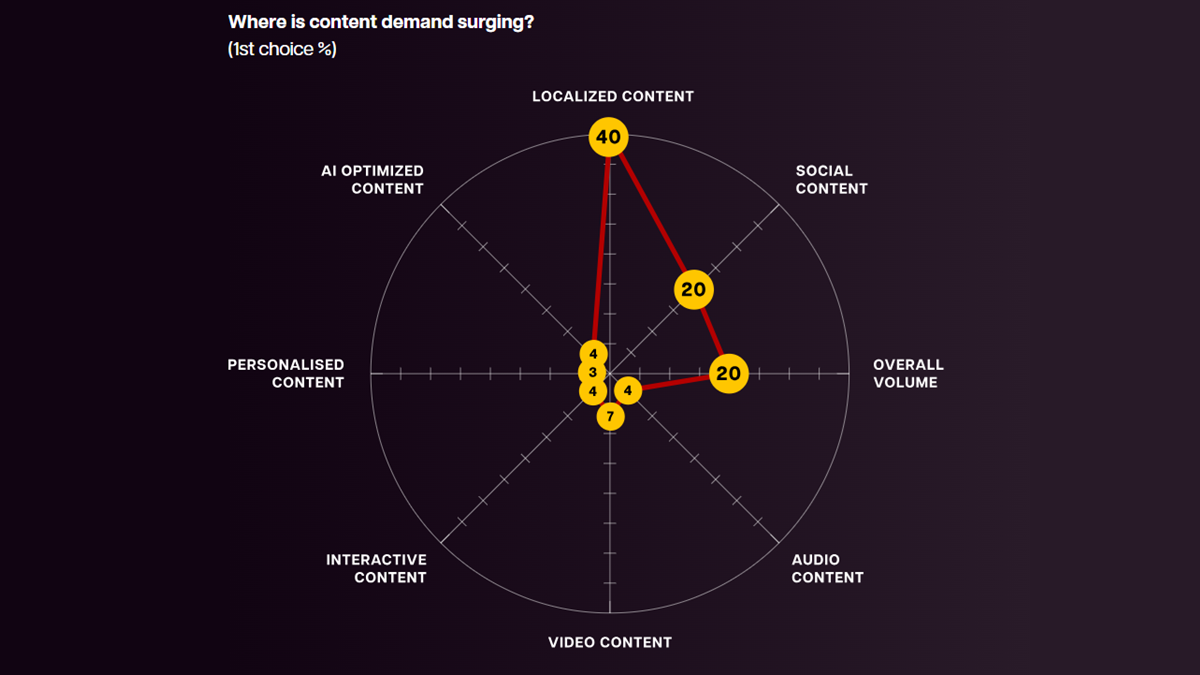
The vast majority of content leaders have little to no confidence that AI can handle cultural and emotional nuance across global markets – yet they are scaling AI-generated content across those same markets regardless. That’s according to new research from global AI solutions company, RWS.
The study, based on a survey of 200 senior content leaders across the US, UK and Asia-Pacific, finds that while 86% say AI has accelerated content creation, 65% report it has simultaneously slowed localisation – generating a compounding rework burden that is consuming over a fifth of enterprise localisation budgets every year.
Over a fifth (21%) of localisation budgets are lost to rework: content that must be corrected or culturally adapted before it can be deployed in global markets.
Deploy smarter AI
“Ask content leaders whether AI can truly handle cultural nuance, and fewer than one in 10 say yes with confidence. Yet the same leaders are scaling AI-generated content across global markets regardless,” said Emma Fisher, VP of Global Marketing at RWS. “The answer isn’t to slow down – it’s to deploy smarter AI. AI that understands context, culture and brand intent as fluently as it generates content at scale.”
71% of content leaders are using generative AI for translation – a task AI handles with increasing competence – while only 20% use it for localisation, which demands something far harder: the cultural fluency to make content feel native, resonant and relevant in every market.
Despite 56% of leaders describing their organisations as “managing but stretched,” and only one in six saying they are handling content demands well, more than half believe they will cope better in three years’ time – without significant structural change. RWS’s research suggests this optimism is misplaced. As AI-generated content volumes continue to grow across more languages, formats and channels, the complexity tax will only compound – unless enterprises embed cultural intelligence into their content operations upstream, before the damage is done.
You can read the full report here.

Steve is an award-winning editor and copywriter with more than 20 years’ experience specialising in consumer technology and video games. With a career spanning from the first PlayStation to the latest in VR, he's proud to be a lifelong gamer.